


So, you’re new to F1. Whether it’s the teams, drivers, terminology, or memes that have you scratching your head, this article will help you find yourself in the amazing world of the pinnacle of motorsport. This article in particular is about the basics of race weekends.
Each race happens over the course of a weekend. Sometimes there may be a week or a few in between. Sometimes, you may have two races back-to-back, and sometimes even three. The first day of the weekend is Thursday, which is media day. Drivers and team personnel are interviewed, and oftentimes this is when the social media admins of each team tend to film content. Next, you have Friday, which is entirely dedicated to practice (AKA, nobody watches on this day). Teams have two one-hour practice sessions in which drivers can get in a couple of laps and optimize the setup of the car. Sometimes, drivers in other series, like Formula 2, Formula 3, and Super Formula, are enlisted by teams to drive during FP1 (the first free practice) to gauge performance. However, on either of the 6 sprint weekends, there is only one free practice on this day, and what typically is FP2 (the second free practice) gets replaced by Sprint Qualifying.
Saturday is the last day before the race. Teams are given yet another hour of free practice (known as FP3) before qualifying. In qualifying, drivers attempt fast laps to start on the front end of the grid on Sunday (race day). However, there is a twist. Each part of qualifying (Q1, Q2, and Q3) is an elimination-style round. In Q1, the 5 slowest drivers are eliminated and not allowed to progress into Q2. In Q2, the 5 slowest drivers out of the 15 that remain don’t progress into Q3. Q3 isn’t an elimination round. Instead, the 10 fastest drivers try to get in the fastest laps to arrange themselves from 1st to 10th. 1st place in qualifying is called “pole position,” and it is the best place to start the race on Sunday from.

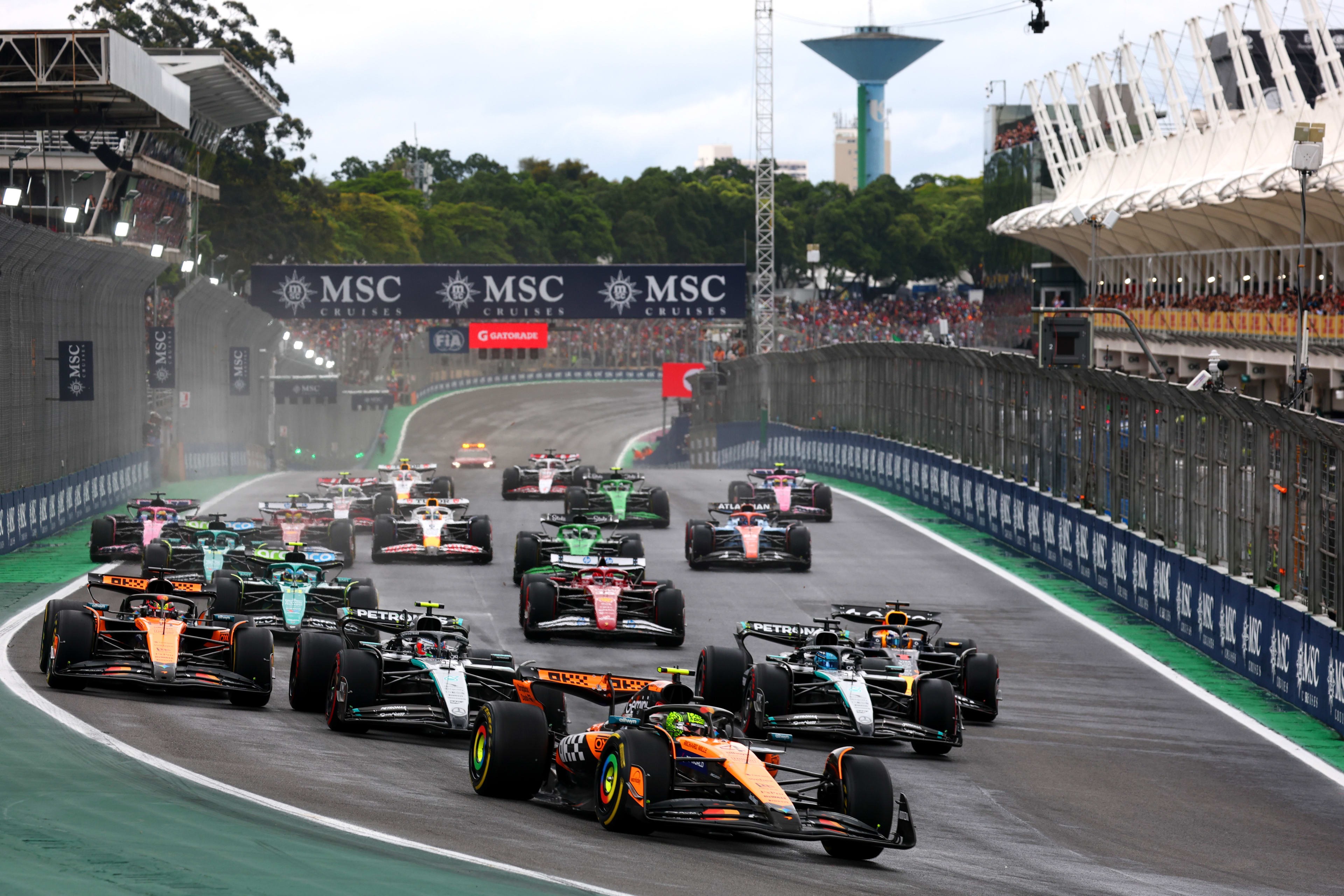
Although there are no points awarded during qualifying (something which I think should change), getting the fastest laps is crucial to optimize yourself the following day. Then you have Sunday, which is race day. Around 40 minutes before the formation lap, we get a grid walk from one of the commentators. They go from the back of the grid to the front, talking about each driver, any issues they’ve had over the weekend, and what tire they start on. When the clock hits the designated times, all cars complete a formation lap. In the formation lap, cars complete a slow lap around the track to heat up their tires and arrange themselves in the correct order based on qualifying yesterday. Then, after the 5 red lights go out, it’s lights out and away we go.

Races typically last about 50-70 laps based on the track length, and a full-length race is almost always about 2 hours long. There are many things to take into account during a race, such as tires, strategy, safety cars, and more. Tires are one overlooked aspect of the sport. There are 3 different “slick” compounds used during a weekend and 2 constant wet tires. The 3 tires are softs, mediums, and hards. Softs are the fastest tires but degrade or wear out quickly. Hards are the slowest tires but last very long. Mediums are a mix of the two. Although it may seem straightforward, each track has its own individual optimal strategy, which can vary greatly depending on weather conditions. After the race is done, the top three, or “podium finishers,” are given trophies, and the winning driver gets their national anthem played. Afterwards, the drivers spray each other with champagne, and the celebrations begin.
This is part 1 of a series of articles dedicated to new fans of the sport. Have any feedback? Let me know in the comments down below. Subscribe to our newsletter and have fun reading!

Leave a Reply